
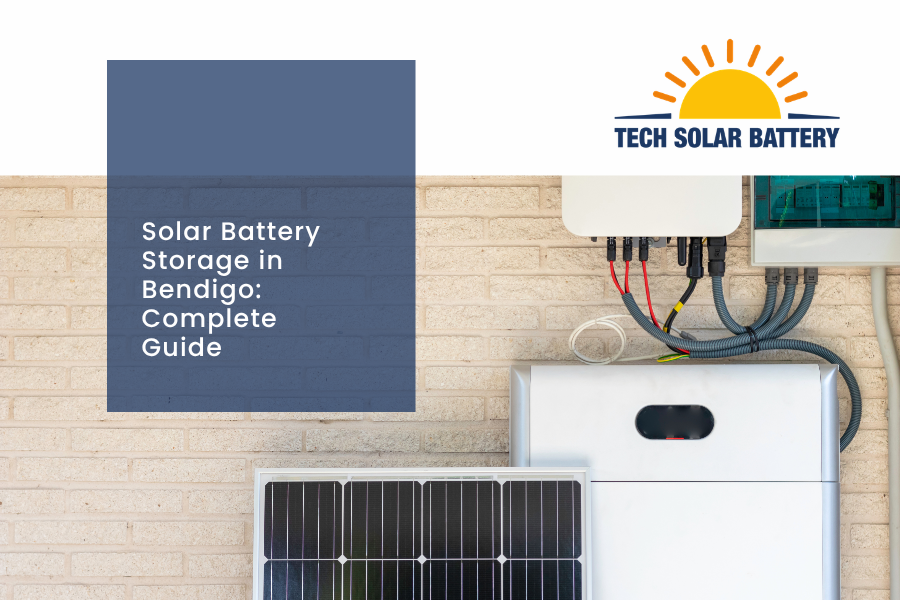
Making the most of your solar panels can help reduce household electricity bills, but much of the energy they generate during the day may go unused if no one is home. A solar battery allows you to store this excess electricity and use it later, giving you greater control over your household energy consumption.
For homeowners across Bendigo and regional Victoria, battery storage can be a practical way to make better use of solar power, particularly during the evening when household electricity demand increases.
Keep reading to learn how solar battery storage works, its key benefits, installation considerations and how to choose a suitable system for your home.
How solar battery storage works
A solar battery stores surplus electricity generated by your rooftop solar panels instead of sending all the unused energy back to the grid. The stored power can then be used when your panels are producing little or no electricity.
During the day, your solar panels generate electricity to run household appliances. When production exceeds your immediate needs, the extra energy can charge your battery. Later, the stored electricity can power lights, appliances and other household equipment.
If your battery runs low or your energy demand exceeds the available supply, your home can draw electricity from the grid, depending on the system configuration.
A properly sized battery helps you use more of the solar energy you generate rather than relying as heavily on purchased electricity.
Benefits of Installing a Solar Battery in Bendigo
For households looking to improve energy efficiency, a home battery in Bendigo, VIC, offers several practical advantages.
1. Reduce Reliance on Grid Electricity
A battery allows you to use stored solar power after sunset, when rooftop panels are no longer generating electricity. This can reduce the amount of energy you need to purchase from your electricity retailer.
2. Make Better Use of Excess Solar Energy
Without a battery, surplus solar electricity is typically exported to the grid. Storing some of this energy allows you to use it later, which can be more valuable when your electricity import rate is higher than your solar feed-in tariff.
3. Manage Electricity Bills
Using stored energy during expensive electricity periods can help lower your bills. The actual savings depend on your electricity tariff, battery capacity, household consumption and how effectively you use the stored power.
4. Gain Backup Power with Compatible Systems
Some battery systems can supply electricity during a grid outage when they have suitable backup functionality. This may help keep selected appliances operating during an interruption, depending on the battery’s charge, system design and electrical load.
5. Support a More Sustainable Household
Using more of your own solar electricity can reduce the amount of grid electricity your home consumes. The environmental benefit depends on the electricity sources being displaced and the battery’s overall lifecycle impacts.
Is solar battery storage worth it in regional Victoria?
Solar battery storage can be worthwhile for many households, but the financial benefits depend on individual energy use and installation costs. Homes that generate surplus solar electricity during the day and consume more power in the evening may have greater opportunities to benefit.
Before investing in a battery system, consider these factors.
1. Your Current Solar System
If you already have rooftop solar panels, check how much electricity they generate and how much you export to the grid. Your existing inverter and electrical setup will also determine which battery options are compatible.
2. Your Daily Electricity Consumption
Review your electricity bills to identify when your household uses the most power. If much of your consumption occurs after sunset, storing daytime solar generation may help reduce grid purchases.
3. Electricity Rates and Feed-in Tariffs
Compare the price you pay for grid electricity with the credit you receive for exporting surplus solar power. A larger difference between these rates may improve the financial case for storing and using your own energy.
4. Battery Purchase and Installation Costs
Compare the total installed price, usable storage capacity, warranty, expected performance and any required electrical upgrades. A battery should be selected according to your household’s needs rather than capacity alone.
Choosing the Right Battery System for Your Home
The right battery system depends on your electricity usage, existing solar installation and plans for future energy needs.
1. Assess Your Energy Consumption
Review at least 12 months of electricity bills to understand seasonal changes in household demand. This helps identify how much energy you may need to store and use outside daylight hours.
2. Choose Suitable Battery Capacity
Battery capacity is measured in kilowatt-hours (kWh). A smaller household may need less storage than a larger home with several high-energy appliances.
Focus on usable capacity, not just the advertised total capacity. Your installer should also assess the battery’s power output to determine which appliances it can run at the same time.
3. Check Inverter Compatibility
Some batteries work with particular inverter types, while others require additional equipment or a different configuration. An installer can assess your existing system and recommend a compatible solution.
4. Consider Backup Power Requirements
If keeping essential appliances running during outages is important, ask about backup capability before selecting a battery. Not every installation provides whole-home backup, and some systems require additional equipment or circuit changes.
5. Review Warranties and Monitoring Features
Compare the product warranty, expected battery performance and available monitoring tools. Monitoring can help you understand when your home generates, stores and uses electricity, making it easier to adjust consumption patterns.
Adding a Battery to Solar
If you already have rooftop solar panels, you may not need to replace your entire installation to add battery storage. The process depends on your existing inverter, solar system design and the battery selected.
A professional assessment typically includes the following steps.
1. Review your existing setup: Check your solar panels, inverter, switchboard and electricity consumption.
2) Determine the storage requirements: Estimate the amount of surplus energy available and how much electricity you use after sunset.
3) Select a compatible battery: Choose suitable capacity, power output and backup features.
4) Obtain a detailed quote: Review equipment, installation costs, warranties and applicable incentives.
5) Arrange installation and testing: A qualified installer completes the work, checks system operation and explains how to monitor energy use.
If you are planning a new solar installation, consider panels and battery storage together. A coordinated system design can help match generation, storage and household demand.
Solar Battery Incentives and Installation Costs in 2026
The upfront cost of a battery can be a major consideration for Victorian homeowners. The final price varies according to battery capacity, brand, inverter requirements, installation complexity and additional electrical work.
In 2026, eligible Australian households may receive an upfront discount through the Australian Government’s Cheaper Home Batteries Program. The program supports eligible battery installations connected to new or existing rooftop solar systems, with the discount calculated according to the applicable scheme requirements and usable battery capacity.
Before committing to an installation, ask your installer to confirm:
- The total installed cost before and after applicable discounts.
- Eligibility under the current federal battery program.
- The battery’s usable capacity and warranty conditions.
- Any additional inverter, switchboard or electrical work.
- Expected savings based on your actual energy usage.
Why choose Tech Solar Battery for solar battery storage?
Tech Solar Battery provides tailored solar and battery installation solutions for homes and businesses across Bendigo and surrounding Victorian regions. Its team assesses energy requirements, existing equipment and property conditions to recommend a system suited to each customer’s needs.
- Custom battery solutions for residential and commercial properties.
- Assessment of existing solar systems and battery compatibility.
- Professional installation by qualified, accredited installers.
- Assistance with system approvals and applicable incentives.
- Ongoing support and maintenance for installed systems.
Final thoughts
Solar battery storage in Bendigo can help households make better use of their rooftop solar generation, reduce reliance on grid electricity and manage energy costs. The benefits depend on your solar output, electricity consumption, tariff structure and the battery system you choose.
Before installing a battery, compare usable capacity, total costs, warranty coverage and available incentives. A professional assessment from a local installer can help you determine if adding battery storage is a practical long-term investment for your home in regional Victoria.
FAQs About Solar Battery Storage
1. Can I add a battery to my existing solar panels in Bendigo?
Yes, many existing solar systems can be upgraded with battery storage. Compatibility depends on your inverter, system configuration and the battery selected. An installer can assess your setup and recommend a suitable option.
2. How much can a solar battery save on electricity bills?
Savings depend on battery capacity, solar generation, household usage, electricity tariffs and installation costs. Using stored solar power during expensive periods can reduce grid purchases, but the exact savings vary between households.
3. Will a home battery power my house during a blackout?
Only if the battery system has suitable backup functionality and has been configured for outage operation. The appliances that remain powered depend on the installation design, available stored energy and the system’s output capacity.
4. Are solar battery discounts available in Victoria in 2026?
Eligible households may qualify for an upfront discount through the Australian Government’s Cheaper Home Batteries Program. The amount and eligibility depend on the current program rules and the battery installed.
5. How do I choose a solar battery installer in Bendigo or Castlemaine?
Look for an installer with appropriate accreditation, relevant experience, clear pricing and suitable warranty arrangements. Ask for a site assessment, a detailed written quote and an explanation of the expected system performance before proceeding.